
AGRICULTURE FARM · ÁNANDA NAGAR
Cultivating food, skill and rural self-reliance.
Across fields and orchards, Ánanda Nagar is developing a practical agriculture model rooted in crop diversity, local knowledge and care for the land.
A LIVING DEMONSTRATION
Farming here is both production and education.
Shrii Prabhat Ranjan Sarkar encouraged Ánanda Nagar to introduce new crops and demonstrate how a resource-poor rural area could progress through better agricultural methods.
The growing farm project at Bansghar carries that vision into practice—cultivating food while building confidence, experience and productive use of the land.
Better cultivation strengthens food security, livelihoods and confidence in the land.
A DIVERSE FARM SYSTEM
Fields, orchards, methods and community.
01
Field crops
Paddy, maize, millets and pulses create a practical foundation for local food production.
02
Fruit & trees
Citrus, mango, papaya, banana, guava, moringa and other perennial crops widen the harvest.
03
Better methods
Nursery preparation, transplanting, water management and harvesting connect each season.
04
Community
Hands-on farm work develops practical knowledge, local employment and shared capability.
CROPS ADAPTED TO PLACE
Diversity makes the farm more resilient.
The farm grows paddy, maize, millets and several pulses alongside fruit crops including malta citrus, ber, grapes, papaya, banana, mango, litchi, chikoo, guava, pomegranate, moringa and date palm.
Combining annual field crops with fruit and tree cultivation spreads opportunity across seasons and makes the farm less dependent on any single harvest.
A strong rural economy begins with productive land and practical knowledge.
FARMING FOR SELF-RELIANCE
FROM NURSERY TO FIELD
Rice cultivation begins with careful preparation.
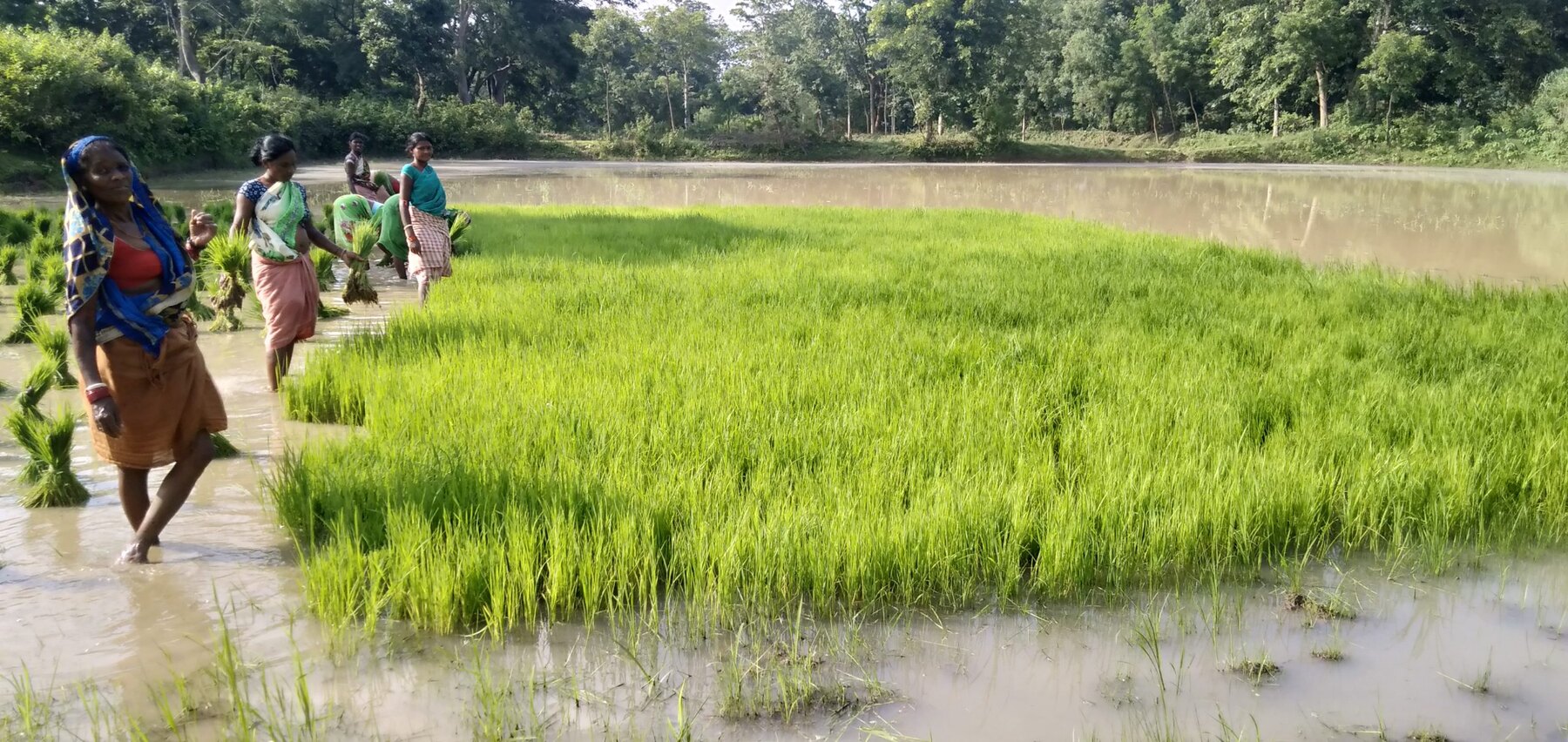
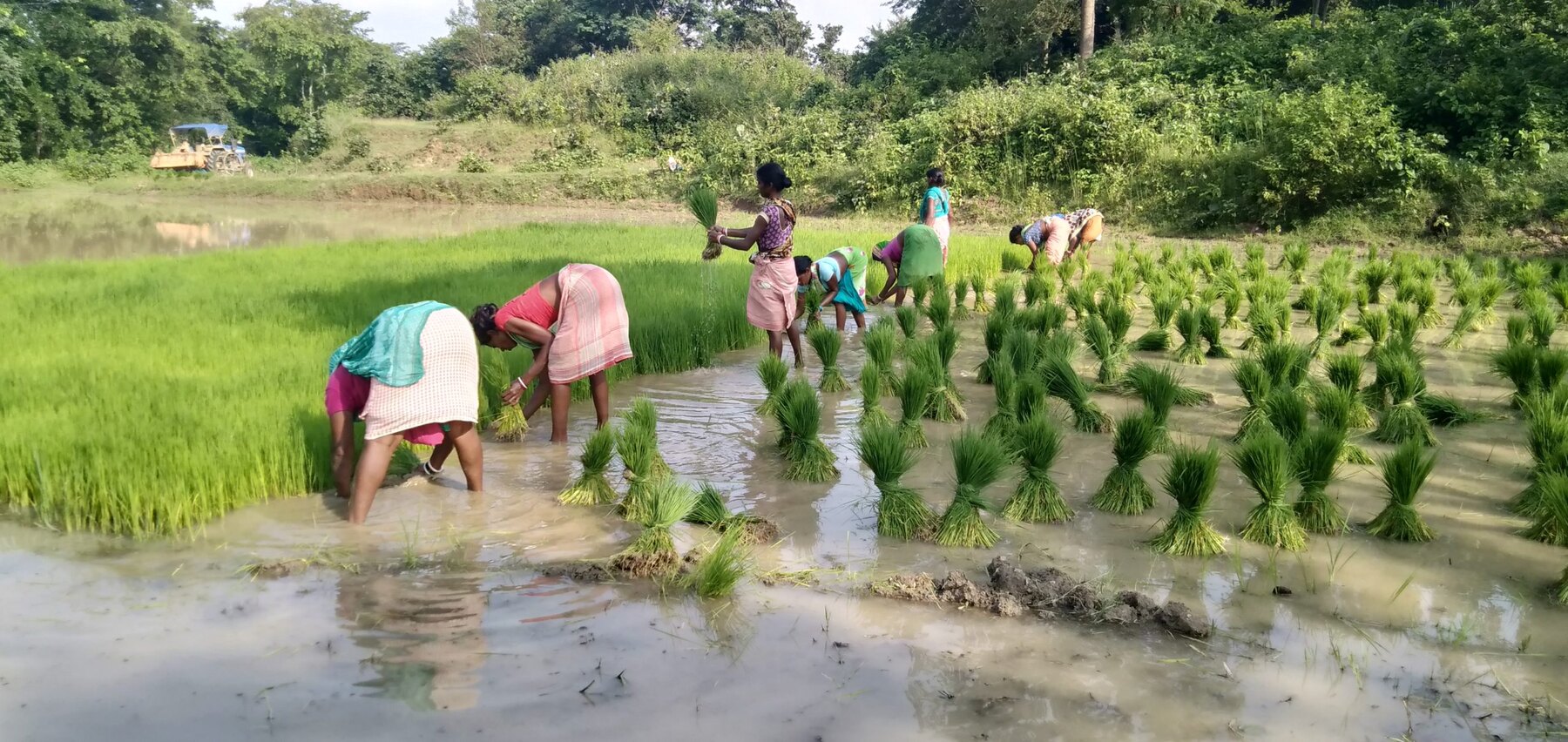
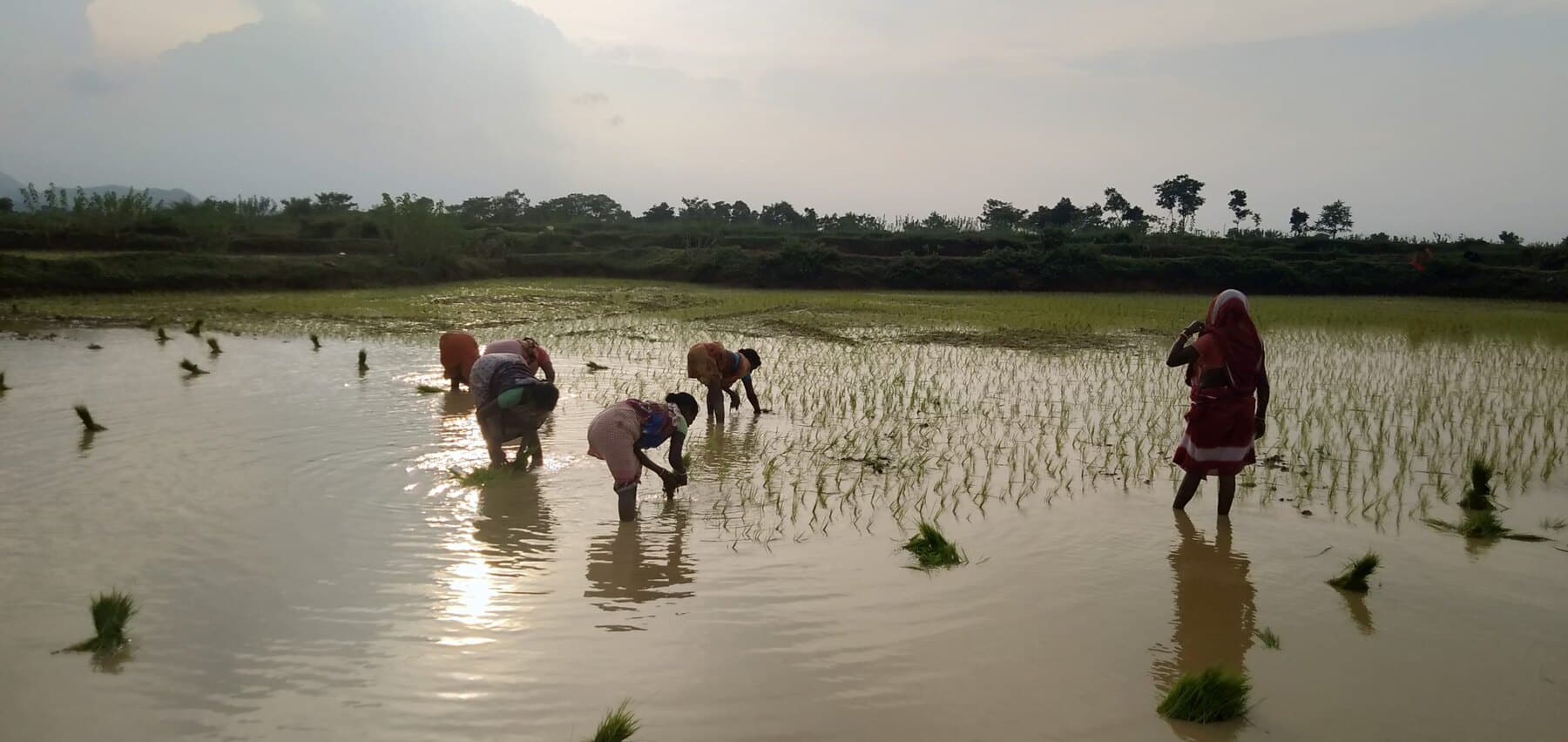
Rice cultivation begins with vigorous seedlings raised closely together before being moved into prepared paddy fields.
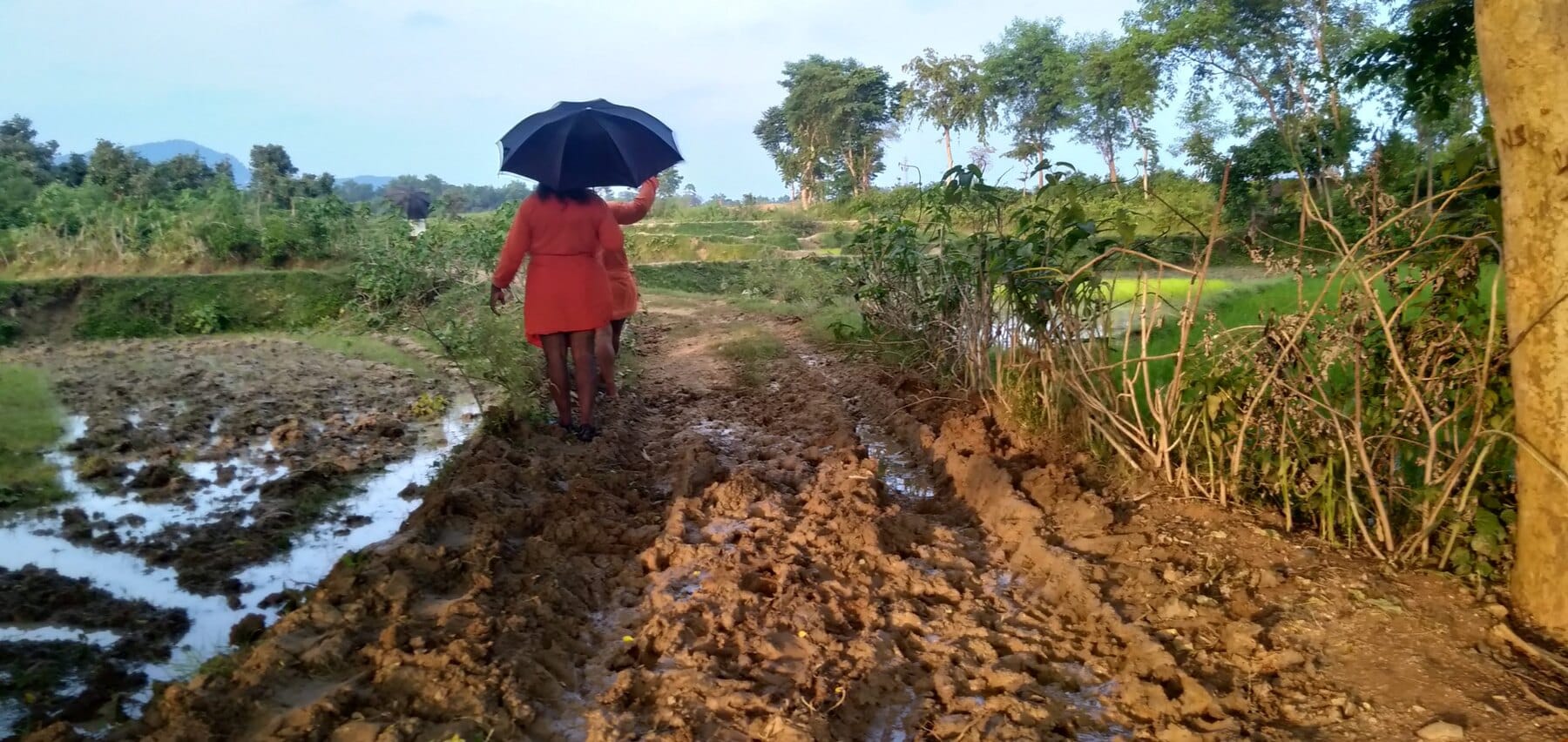
Transplanting is skilled, coordinated work. The archive photographs show teams moving steadily through the water, establishing the next crop plant by plant.
FROM FIELD TO HARVEST
Hand work and machinery meet at the right moment.
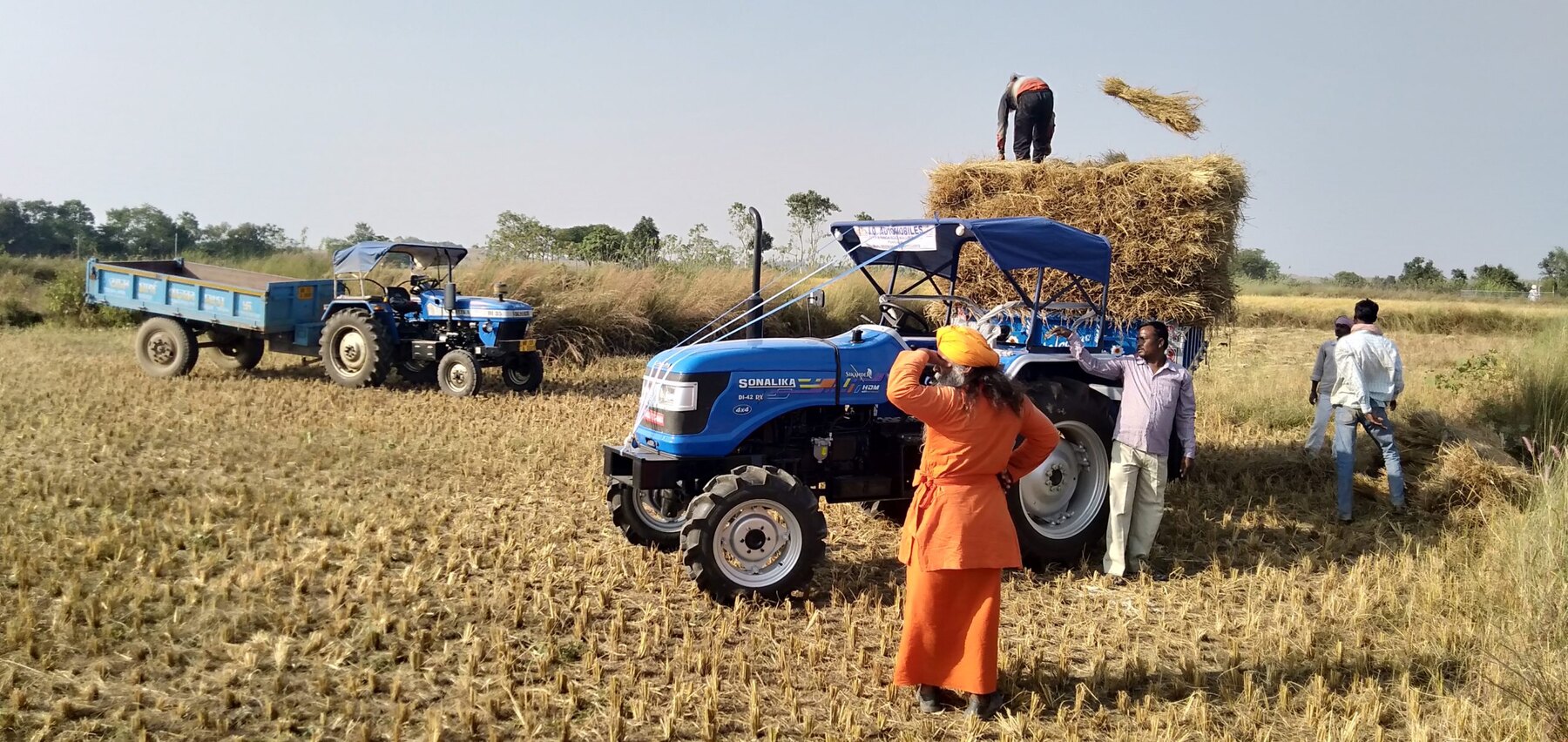
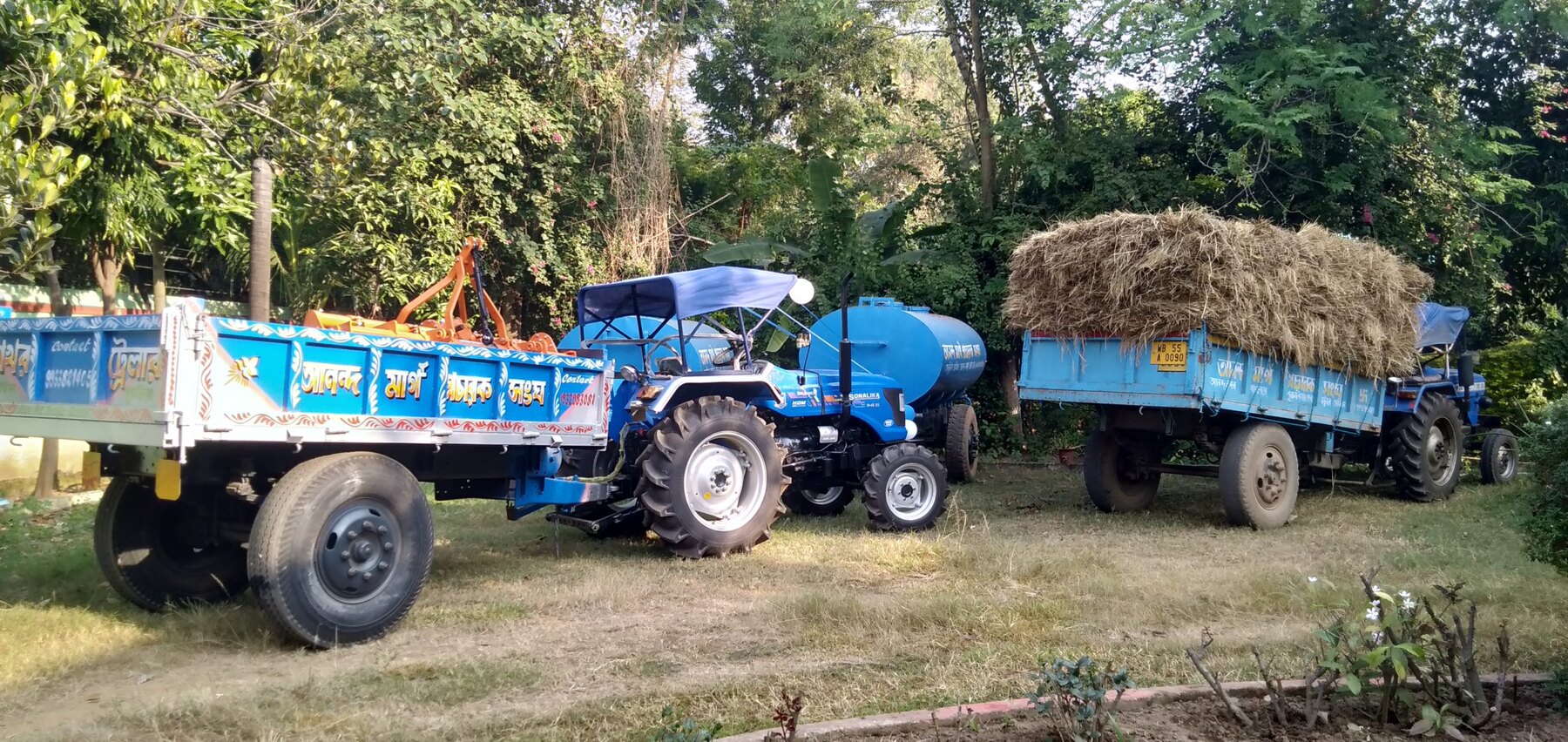
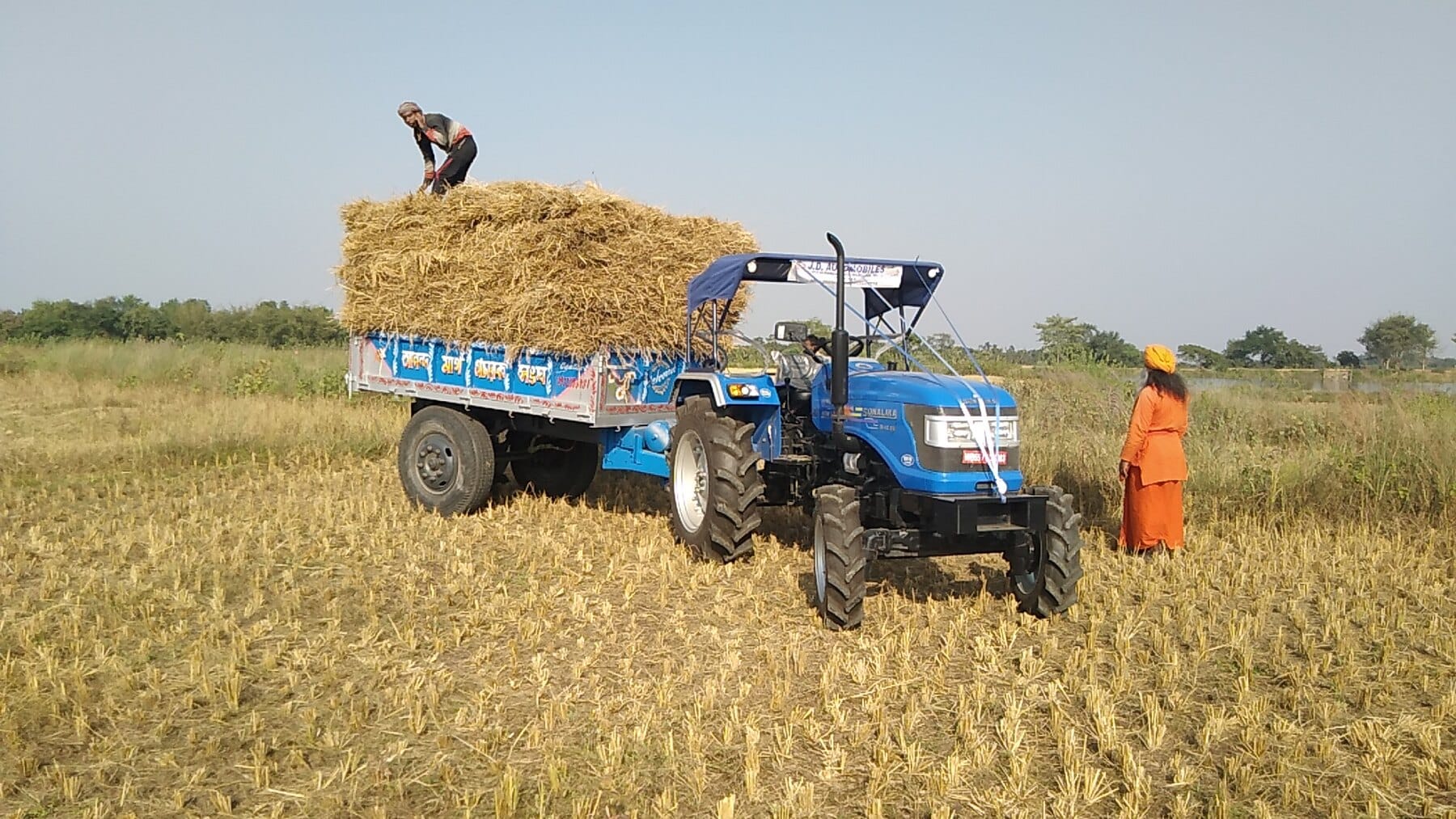
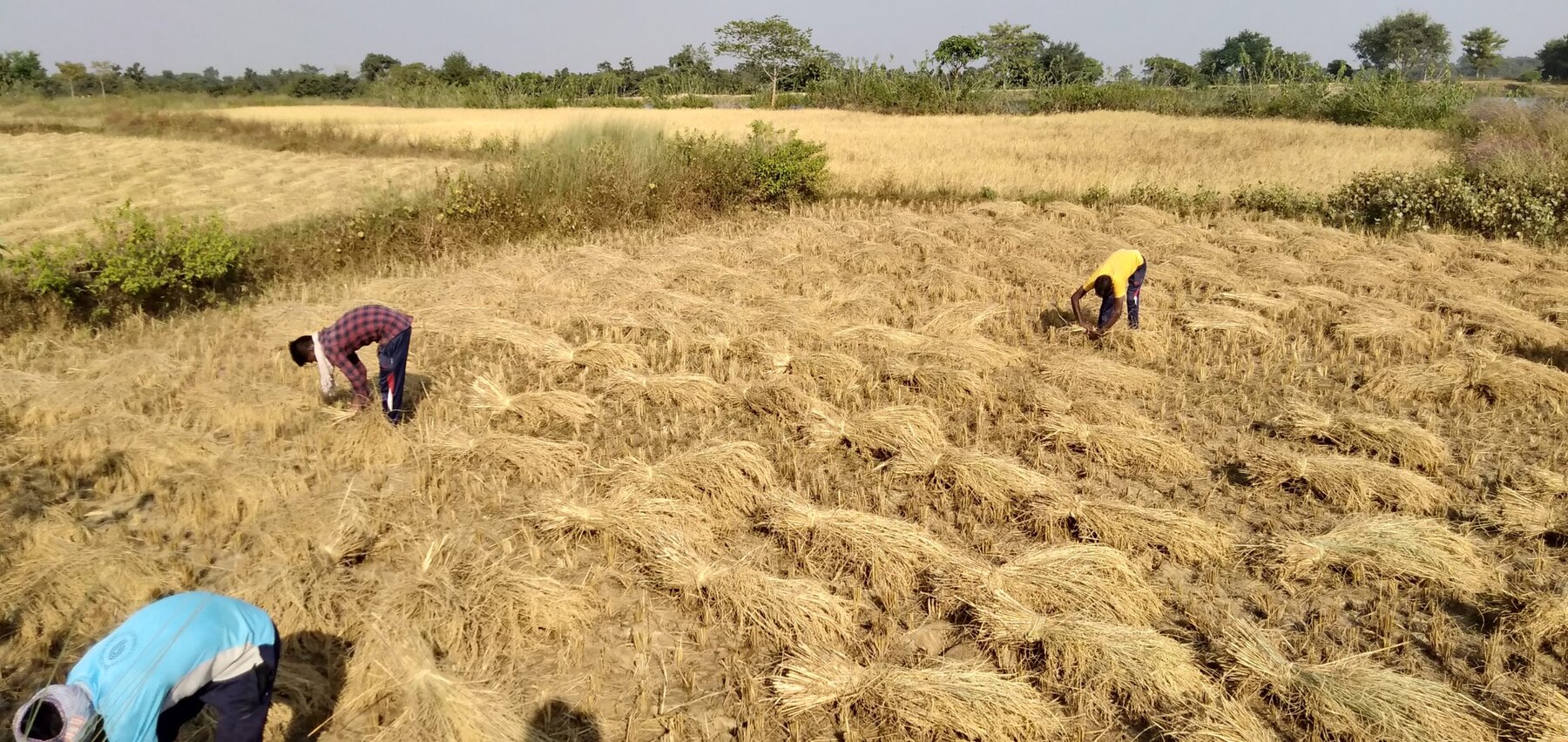
At harvest time, hand work and machinery meet. Tractors help move cut crops and carry the harvest, reducing physical burden while keeping local knowledge at the centre of the operation.
This complete cycle—from preparing seedlings to bringing produce out of the field—is what turns land into dependable nourishment and livelihood.
WHY AGRICULTURE MATTERS
Food production supports every other sphere of development.
FOOD SECURITY
Diverse crops supporting more dependable, locally rooted nourishment.
RURAL SKILL
Knowledge built through nurseries, planting, water management and harvest.
LOCAL ECONOMY
Productive land creating work, value and greater community self-reliance.
ORIGINAL SITE ARCHIVE · AGRICULTURE
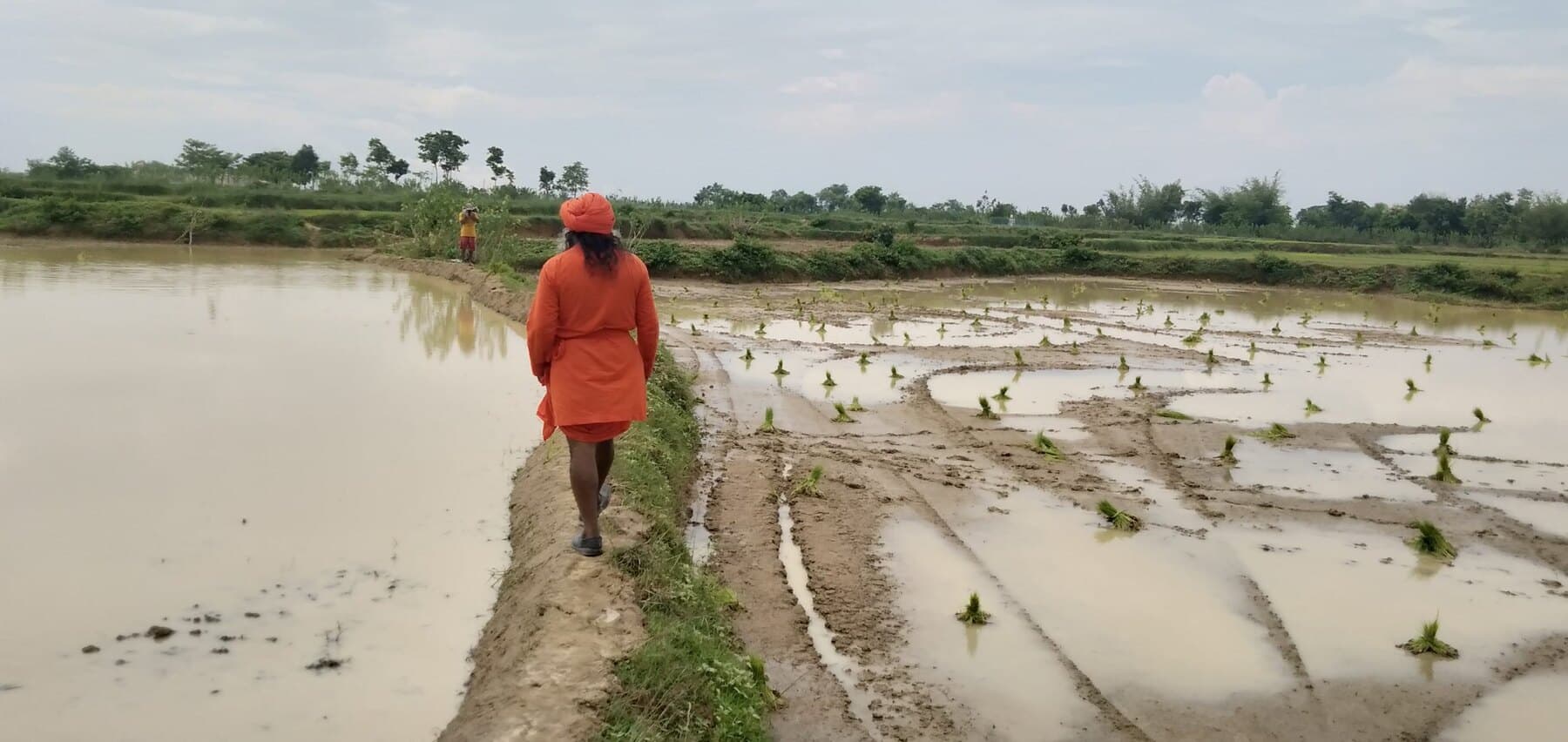
From flooded paddy to the harvest field.
GROWING A MORE SELF-RELIANT FUTURE